
a family enjoying a holiday feast
Maybe you’ve recently moved into your first home or you volunteered to host the family holiday feast this year. Either way, if you’re new to entertaining guests at large, formal meals, read our guide to essential serving dishes. We’ll also offer advice on how to display them when they’re not in use.
The Most Useful Serving Pieces
Deciding which serving items to purchase may feel overwhelming. To get started, picture the last multicourse meal you ate or look back at photos from Thanksgivings past. You probably see a variety of bowls and platters with utensils. That will give you an initial idea of what kinds of dishes you might need in your home.
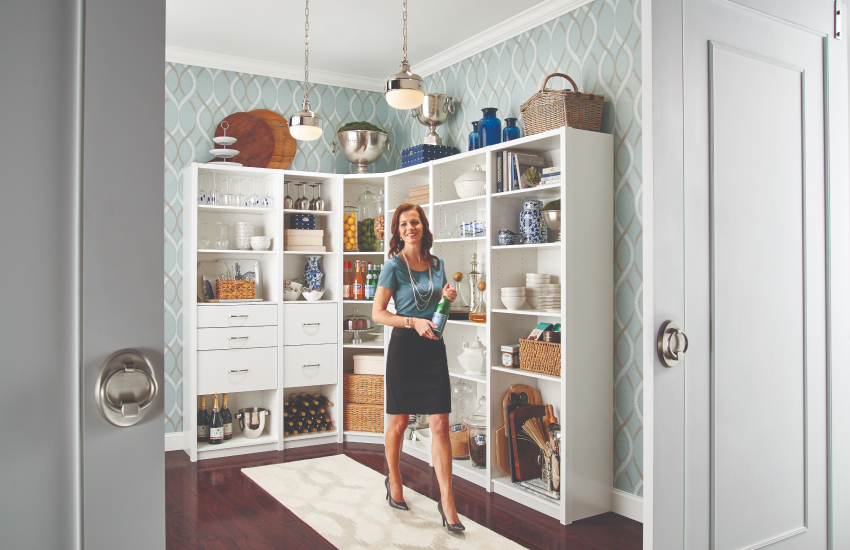
An attractive storage system like this SuiteSymphony one can hide your serving bowls and other dinner party necessities in the dining room.
To get more specific ideas, whether you’re registering for gifts or stocking your shelves yourself, the following checklist will serve you well.
- Small and medium-sized bowls to hold side dishes and bread
- A large bowl for tossed salads and pasta dishes
- A platter to present meat dishes like a whole turkey, roasted vegetables or some desserts, such as a yule log.
- A chip and dip server for more casual get-togethers or cocktail parties.
- A multitiered stand to display hors d’oeuvres or small desserts
- A cake stand for birthdays and other celebrations
- A Dutch oven that you can use to prepare and serve soups and stews
- A cheese board for charcuterie or cheese and crackers
- An assortment of utensils, including salad tongs, a ladle, a cake knife, and serving spoons and forks.
Tailor this list to your budget and the way you entertain. Also, feel free to mix and match patterns and colors if full coordinating sets of dishes aren’t your style.
Ways to Display and Store Them
What do you do with everything when there’s no holiday feast or dinner party? Some people like to showcase their serving dishes, especially if they’re statement pieces or sentimental items. Other people prefer to store them behind doors, only bringing them out for special occasions.
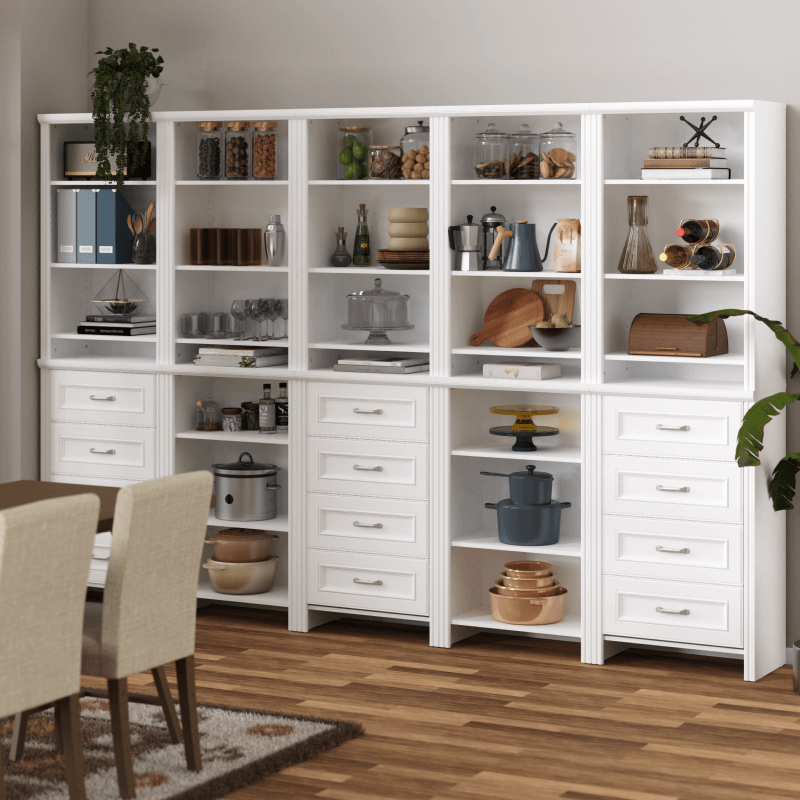
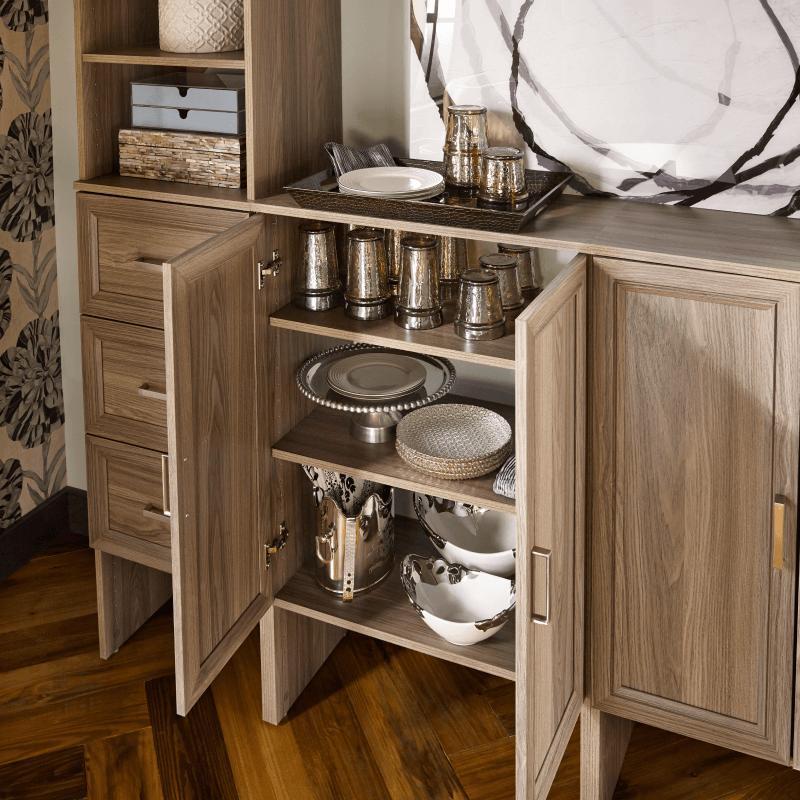
This Impressions storage system gives serving items their places to shine, and it also contains drawers for napkins, napkin rings and other smaller tabletop decor.
It’s a personal preference – or sometimes a matter of space. Do you have a large pantry but a small dining room? You might have to keep your larger serving pieces in the kitchen. If the opposite is true for you, think about the items you have, your existing storage furniture in the dining room and whether you want to display your dishes all the time.
Consider also that a few of your dishes may be ripe for double-duty. For example, a large decorative bowl could contain fresh fruit on your kitchen counter on a daily basis and perform as a salad bowl when guests come over.
There’s no right or wrong way to store your serving dishes, as long as you know where they are and in a secure place, where young children and pets can’t accidentally knock them over.
So, write up your list of essential serving dishes (after taking inventory of what you already have) and get ready to send the invitations to your first dinner party!
Store your serving dishes