


Modular Closet system
Outerwear season has arrived. It’s that time of year when we pull out our puffer jackets, leather bombers and full-length wool dusters. But where will you put them? Read on for coat storage ideas, plus suggestions for where to keep your winter accessories and cleaning and care tips.
Outerwear Storage
To help prevent everyone’s coats and other cold-weather accessories from being strewn on every surface of your house, establish a dedicated space for them. Where everything will live when not in use depends on a few factors:
Your home’s layout: We think every home should have a coat closet, but no one asked us. So, you may be missing a built-in solution. If your foyer can accommodate it, install an organization system on the wall closest to the front door. For apartments or smaller homes, you might have to settle for everyone’s bedroom closet.

Create coat storage in the entryway that can hold the whole family’s outerwear. Featured: 12-inch closet organizer
Your family’s routine: Perhaps you always come home through the garage or a side door – or you tend to get wet or dirty from winter sports or weather conditions. A mudroom setup will help you keep your floors cleaner (and safer), so you can proudly welcome guests in the front door.
What you need to store: Smaller households and people who live in milder climates won’t require as much space for winter gear as larger families in snowy parts of the country. Take inventory of your coats and other outerwear to determine how much room to devote to them. You might find that a couple of hooks and a small cabinet by the front door are all you need.
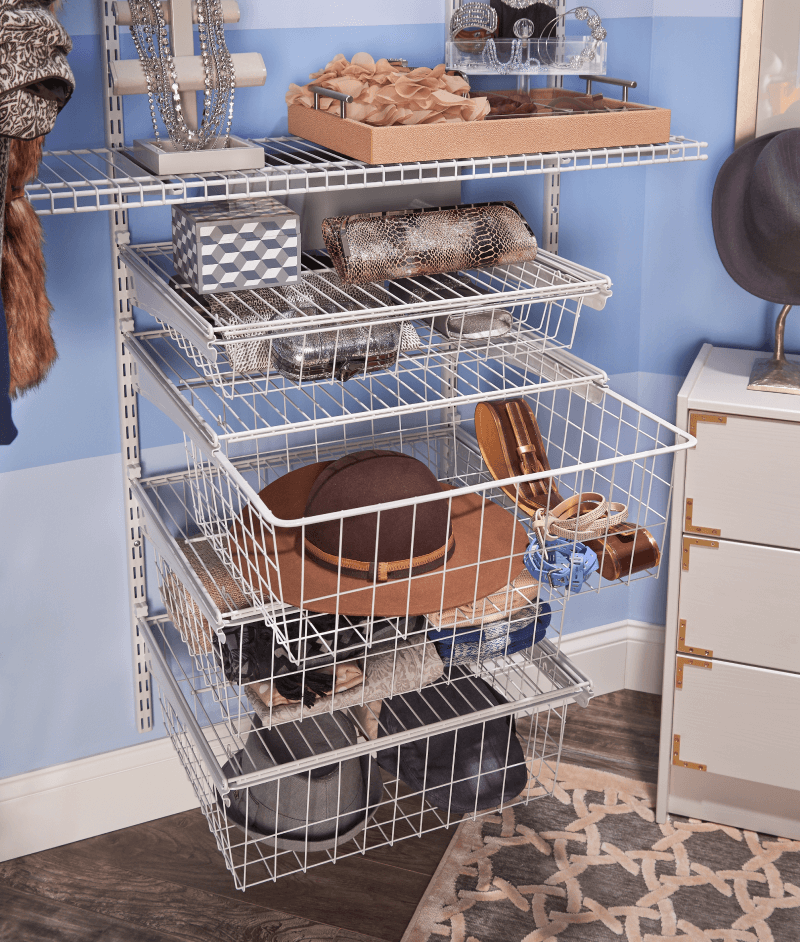
Your winter accessories might fit best in your bedroom closet. Featured: ShelfTrack drawer kit
Outerwear isn’t just coats. Your scarves, hats and gloves keep you warm and complete your look. Where you store these could vary based on your available space and possibly their primary purpose. Maybe you’ll want your fashionable accessories in your bedroom closet so you can coordinate them with your entire ensemble, while more practical items could dry out in the mudroom.
Coat Care Tips
Mud. Snow. Coffee. Hot chocolate. Your coat faces a lot of potential dangers. How do you clean and protect it so you can still wear it next winter? We have your quick guide to caring for your coat, whether it’s made of wool, nylon or leather.
A down-filled puffer coat is probably the easiest to clean. The nylon or polyester shell’s water-resistant properties make it less susceptible to staining – and it’s machine-washable. You can put it in the dryer, too. Just toss in a tennis ball (but not one your dog has chewed) or a dryer ball to stave off clumping and lessen odor as the down dries. Some retailers also recommend turning the coat inside out and zipping it up. Use the low-heat setting and have patience.
Most wool-blend coats are labeled “dry-clean only.” That doesn’t mean that you have to take it to the cleaners every time you spill something on it. With the proper technique and care, you can spot treat stains before they set in.
Start by blotting the affected area with a paper towel or absorbent cloth. Apply a mixture of wool detergent or mild soap and tepid water to the inside of the cuff or other unseen area of the coat as a test. If nothing bad happens, dab the same mixture on the dirty spot. Rinse with water and blot again once you’ve removed the stain. Allow the coat to air dry before wearing it.
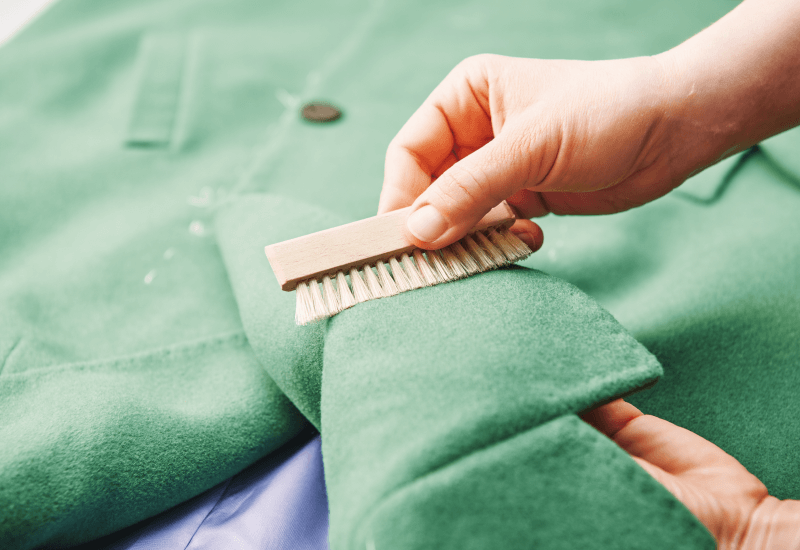
Gently fluff the fibers on your wool coat with a soft-bristle brush to remove loose debris and keep it fresh-looking.
Leather coats need special care to maintain their timeless quality. Always store them on a padded or wide hanger in a cool and dry area, even in the summertime. That means don’t stick them in the attic or the garage unless those spaces are well-ventilated and climate-controlled. Experts recommend conditioning the leather twice a year so it stays supple.
If a spill happens or you get caught in freezing rain, your coat can probably recover (even if your ego takes a hit). Take a clean cloth to liquid stains and blot gently. Only use a cleaner specifically formulated for leather. Stains you can’t remove yourself may be treatable by a professional. Make sure you go to someone who specializes in leather, and not a dry-cleaner.
Your winter coat doesn’t just keep you warm. It also makes your first impression. Don’t leave that to chance. Follow our care and storage advice and stay looking chic all season.
Store your outerwear